

Is nuclear power making a comeback?
Nuclear power is booming again on AI demand, but high costs and an ageing US fleet mean growth depends on restarts and renewals, not new builds.
Covers: New reactors, restarts and small modular reactors (SMRs), with a focus on the US and global outlook to about 2035. Nuclear weapons and waste policy are only mentioned where they affect deployment.
3 free full reads left this month. Join or upgrade
The short answer
Evidence-backed AI-organised, reviewedNuclear is having its strongest moment in decades: record global generation, over 70 GW under construction, and tech companies signing deals to restart old plants and buy power from future small reactors to run AI data centres. Whether that becomes a real build-out depends on cost: recent Western projects like Vogtle ran years late and far over budget, and small modular reactors haven't yet proven they can be built cheaply. In the US, the existing fleet is large (96 reactors, about 98 GW, 18.6% of generation in 2024) but ageing, with 41 reactors already permanently shut down and licences for 22 reactors due to expire before the end of 2029 if not renewed, so near-term growth leans heavily on restarts, uprates and licence renewals rather than new builds.12345
- Evidence 18
- Interpretation 5
In brief
Global nuclear generation was set to reach a record in 2025, with more than 70 GW under construction.1
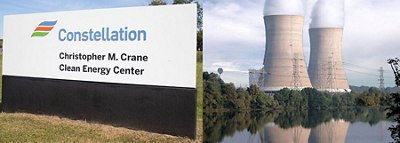
Evidence-backedMicrosoft's 20-year deal will restart an 835 MW Three Mile Island unit, expected online in 2028.2
Evidence-backedGoogle aims for a first Kairos SMR by 2030 and up to 500 MW by 2035.3
Evidence-backedIn the US, near-term capacity turns on the existing fleet: 96 reactors at about 98 GW, 41 already shut down, and 22 licences expiring before the end of 2029 if not renewed.5
Evidence-backed
At a glance
The picture in numbers
Live · updated just now
70 GW
96 reactors
41 reactors
22 licences
The evidence behind it
6 sources- Other studies and data1
- Background5
Published in 2024 and 2025
| Source | Kind | Year |
|---|---|---|
| The Path to a New Era for Nuclear Energy | Background | 2025 |
| Google signs advanced nuclear clean energy agreement with Kairos Power | Background | 2024 |
| Plant Vogtle Unit 4 begins commercial operation | Other studies and data | 2024 |
| Constellation to launch Crane Clean Energy Center, restoring jobs and carbon-free power to the grid | Background | 2024 |
| Nuclear power in the United States (Wikipedia) | Background | Unknown |
| Nuclear power debate (Wikipedia) | Background | Unknown |
The community around it
- Contributions
- 0
- People
- 0
- Following
- 0
Nobody has added anything yet. Experience, evidence or a different view would show up here.
What it means for you
Which fits you?
Pick the situation closest to yours. Each answer says what it rests on.
If you're following the AI power-demand story
Watch restarts of existing plants first: they're the fastest path to new nuclear supply, as with the Crane restart planned for 2028.2
Evidence-backedIf you're weighing claims about small modular reactors
Distinguish signed agreements from reactors under construction, and look for firm cost estimates; the IEA says SMRs must become cost-competitive to scale.13
Evidence-backedIf you're tracking US nuclear capacity to 2030
Follow licence renewals rather than new-build announcements: 22 licences expire before the end of 2029 if not renewed, and 41 reactors have already shut permanently.5
Evidence-backedThe full story · 5 chapters
01
Where things stand
AI summary:Record global nuclear generation and over 70 GW under construction, but cost overruns and delays remain the main obstacle.
Evidence-backed: The IEA's 2025 report projected record nuclear generation that year, with more than 70 GW of new capacity under construction worldwide, much of it in China. It identified cost overruns and delays as the main obstacle to further growth.1
Evidence-backed: In the US, Vogtle Units 3 and 4 in Georgia entered service in 2023 and 2024, the first new reactors built from scratch in decades, after years of delay and large cost increases.4
Evidence-backed: The US fleet is 96 commercial reactors with about 98 GW net capacity (65 pressurised water and 31 boiling water reactors). They produced 771.5 TWh in 2022, and by 2024 nuclear was 18.6% of US electric generation; in 2018 it was nearly 50% of US emission-free generation. The US remains the world's largest producer of commercial nuclear power, though past and scheduled closures mean China and Russia could surpass it.5
02
The AI data-centre effect
AI summary:Microsoft's deal will restart an 835 MW Three Mile Island unit by 2028, and Google aims for a first Kairos SMR by 2030.
Evidence-backed: In September 2024, Constellation signed a 20-year deal with Microsoft to restart Three Mile Island Unit 1 as the Crane Clean Energy Center, about 835 MW, expected online in 2028.2
Evidence-backed: A month later, Google agreed to buy power from Kairos Power's small modular reactors, aiming for the first unit by 2030 and up to 500 MW by 2035.3
03
The existing fleet: renewals, expiries and closures
AI summary:The US fleet is ageing: 41 reactors shut, 22 licences expiring before 2029, so renewals and restarts decide near-term capacity.
Evidence-backed: As of January 2022 the US regulator had granted licence renewals to 94 commercial reactors, and it was preparing for the first applications to operate beyond 60 years, a process that by law requires public involvement.5
Evidence-backed: Against that, 41 US reactors have been permanently shut down as of July 2026, and licences for 22 reactors are due to expire before the end of 2029 if no renewals are granted.5
Evidence-backed: Public argument about nuclear is long-running and was especially intense in the 1970s and 1980s; it intensified again in the 2010s as climate change rose up the agenda. Proponents argue nuclear is a consistently reliable, low-carbon source that provides large amounts of uninterrupted power, well-paying jobs and energy security, and reduces dependence on imported fuels and exposure to fuel price risks.6
04
Three scenarios to 2035
AI summary:Three paths to 2035: breakthrough, muddle through, or stall, with US fleet data tilting toward the middle.
Interpretation: Breakthrough: first SMRs arrive on time, costs fall with repeat builds, and tech demand finances a wave of orders. Muddle through: restarts and uprates of existing plants add capacity, a handful of first-of-a-kind SMRs come online late, and large new builds remain rare outside China. Stall: first SMR projects overrun like Vogtle, investors retreat, and growth comes mainly from China and extended lifetimes of existing reactors.14
Interpretation: The US fleet data tilt the near-term balance toward the middle scenario: with 22 licences expiring before 2030 and 41 reactors already shut, renewals, restarts and uprates are the levers that decide whether US capacity holds or slips, while new-build growth is more likely to come from China.51
05
Indicators to watch
AI summary:Watch the Crane restart, the first Kairos unit, SMR construction starts and costs, and US licence renewals.
Interpretation: Signals that would move the forecast: whether the Crane restart meets its 2028 target; whether the first Kairos unit is on track for 2030; construction starts (not announcements) for SMRs in North America and Europe; and published costs for completed first-of-a-kind SMRs.231
Ask this Sylo
Still wondering about something?
Answers come only from this page's reviewed material, with citations, and say plainly when the page doesn't cover it yet.
Behind this page
Who's adding to it, where it comes from, how it changed and what would make it better. Always open to everyone.
Discussion
Sources
Numbers match the citations in the article. A working link isn't proof that a page supports a claim; check the quoted passage and date.
- 1The Path to a New Era for Nuclear EnergyInternational Energy AgencyPublished Jan 16, 2025Checked Sep 30, 2026
“Nuclear generation is set to reach a record high in 2025. More than 70 GW of new capacity is under construction worldwide, but cost overruns and delays remain a major barrier, and SMRs must become cost-competitive to scale.”
- 2Constellation to launch Crane Clean Energy Center, restoring jobs and carbon-free power to the gridConstellation EnergyPublished Sep 20, 2024Checked Sep 30, 2026
“A 20-year power purchase agreement with Microsoft will restart Three Mile Island Unit 1, adding approximately 835 megawatts of carbon-free energy. The plant is expected to be online in 2028.”
- 3Google signs advanced nuclear clean energy agreement with Kairos PowerGooglePublished Oct 14, 2024Checked Sep 30, 2026
“The agreement aims to bring Kairos Power's first small modular reactor online by 2030, followed by additional deployments through 2035, for up to 500 MW of new carbon-free power.”
- 4Plant Vogtle Unit 4 begins commercial operationUS Energy Information AdministrationPublished May 1, 2024Checked Sep 30, 2026
“Vogtle Unit 4 in Georgia began commercial operation, following Unit 3 in 2023; they were the first new reactors built from scratch in the US in decades, completed years late and far over budget.”
- 5Nuclear power in the United States (Wikipedia)WikipediaPublished Oct 4, 2026Checked Oct 4, 2026
“In the United States, nuclear power is provided by 96 commercial reactors with a net capacity of 98 gigawatts (GW), with 65 pressurized water reactors and 31 boiling water reactors. In 2022, they produced a total of 771.5 terawatt-hours of electricity, and by 2024 nuclear energy accounted for 18.6% of the nation's total electric energy generation. In 2018, nuclear comprised nearly 50 percent of US emission-free energy generation. As of July 2026, 41 reactors have been permanently shut down. The United States is the world's largest producer of commercial nuclear power, and in 2013 generated 33% of the world's nuclear electricity. With the past and future scheduled plant closings, China and Russia could surpass the United States in nuclear energy production. As of January 2022, the U.S. Nuclear Regulatory Commission (NRC) had granted license renewals to a total of 94 commercial reactors. In early 2014, the NRC prepared to receive the first applications of license renewal beyond 60 years of reactor life as early as 2017, a process which by law requires public involvement. Licenses for 22 reactors are due to expire before the end of 2029 if no renewals are granted.”
- 6Nuclear power debate (Wikipedia)WikipediaPublished Oct 2, 2026Checked Oct 4, 2026
“The nuclear power debate is a long-running controversy about the risks and benefits of using nuclear reactors to generate electricity for civilian purposes. The debate about nuclear power peaked during the 1970s and 1980s, as more and more reactors were built and came online, and "reached an intensity unprecedented in the history of technology controversies" in some countries. In the 2010s, with growing public awareness about climate change and the critical role that carbon dioxide and methane emissions plays in causing the heating of the Earth's atmosphere, there was a resurgence in the intensity of the nuclear power debate. Proponents of nuclear energy argue that nuclear power is the only consistently reliable clean and sustainable energy source which provides large amounts of uninterrupted energy without polluting the atmosphere or emitting the carbon emissions that cause global warming. They argue that use of nuclear power provides well-paying jobs, energy security, reduces a dependence on imported fuels and exposure to price risks associated with resource speculation and foreign policy.”
How it changed
Published 4 times since Sep 30, 2026.
- Version 4Oct 4, 2026Live now
Added two new sources on the US reactor fleet and the public debate, which sharpen the picture of where growth can come from (restarts, uprates, licence renewals) and what could slow it (licence expiries, plant closures, contested public support). Kept the existing forecast, scenarios and indicators, and folded the new material into the finding, a new section, uncertainty and takeaways.
- The main finding was rewritten.
- Updated “Where things stand”.
- Added section “The existing fleet: renewals, expiries and closures”.
- Version 3Sep 30, 2026
Added the Big Tech power deals, scenarios for the next decade and indicators to watch.
- Added section “Three scenarios to 2035”.
- Added section “Indicators to watch”.
- Key takeaways were added.
- Version 2Sep 30, 2026
First brief from the IEA's 2025 nuclear outlook and the Vogtle completion.
- The main finding was rewritten.
- The finding is now labelled “evidence” (was “interpretation”).
- Added section “Where things stand”.
- Version 1Sep 30, 2026
Created the Sylo.
- First published version.
Help improve it
The brief is open about what's uncertain. These are the specific gaps that new material would fill.
“Three scenarios to 2035” has no evidence or firsthand experience yet
It's a synthesis for now. Evidence or experience would show whether it holds.
“Indicators to watch” has no evidence or firsthand experience yet
It's a synthesis for now. Evidence or experience would show whether it holds.
Open questions
What are the latest cost estimates for first-of-a-kind SMRs under construction?
No answers yet
Which other closed reactors could realistically be restarted?
No answers yet
How many of the 22 US licences expiring before the end of 2029 will be renewed, and what will replace any that are not?
No answers yet
How has public support for nuclear changed in your country?
No answers yet
Around this topic
Sylos connect: narrower topics report up to broader ones, so what's learned in one place shows up where it matters.